Citizen Scientists Rise Up: Contribute Now to Meaningful Projects


Writing sample and photos by Courtney Sandifer
Read more on on my Substack at https://courtneysandifer.substack.com/
If you have ever taken a photo of a strange-looking critter and searched online to learn more about it, you are ready. If you use an app that identifies birds by their sounds, you are ready. If you have ever seen wildlife on the roadway and wished you could do something to help them, you are ready.
Citizen science allows us "regular" folks, outside of the usual research environment, to contribute to scientific and conservation projects by collecting or analyzing data that would take professional scientists either a million dollars or a million years to do. There are all kinds of apps available to log observations and collaborate with others to document certain weather conditions, flora, fauna and even galaxies and light polution.
Here are a few ways you can get started making a meaningful impact, especially on environmental and climate-focused projects:
Join iNaturalist and start posting.
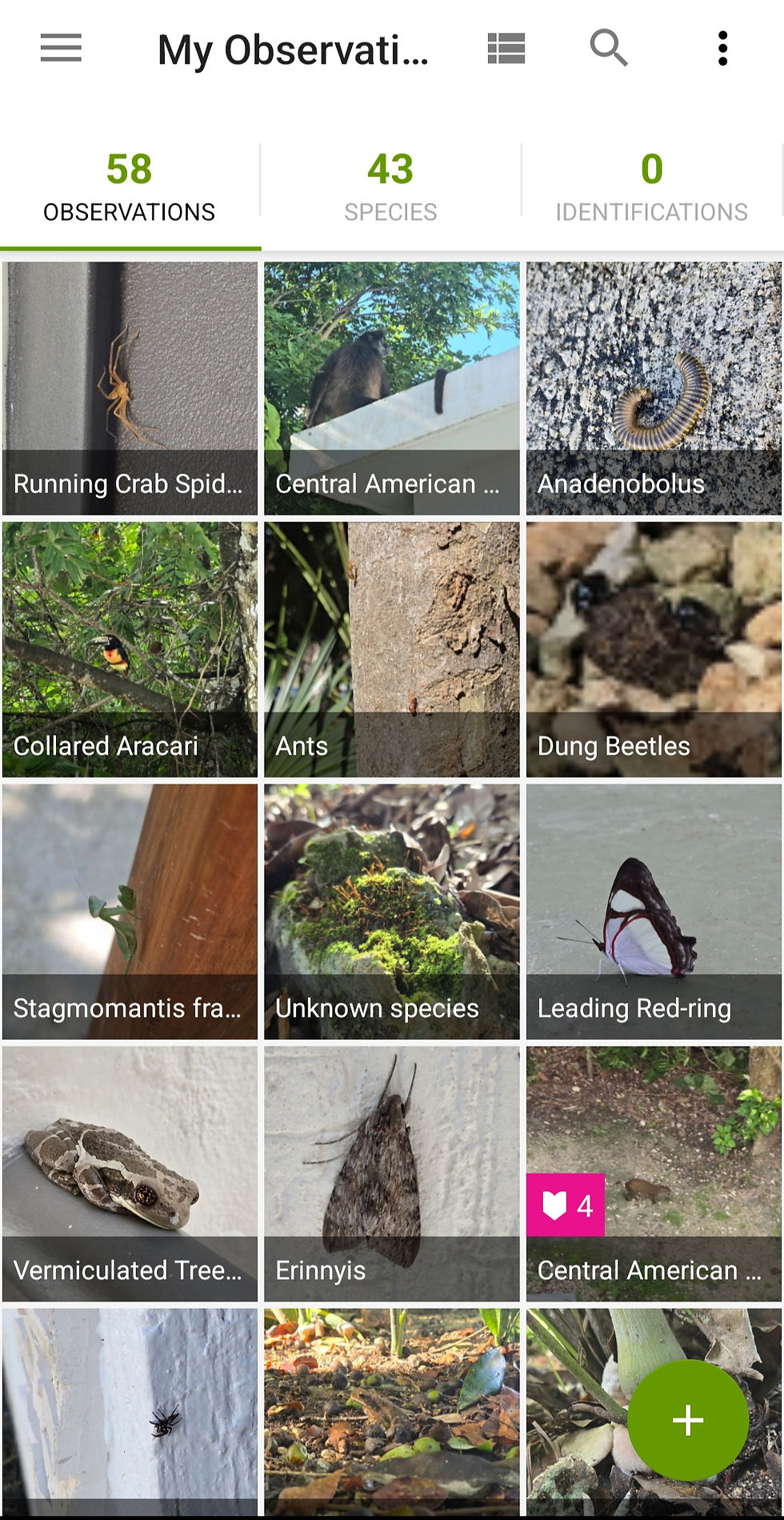
As a non-scientist nerd myself, I have come to love iNaturalist as a way to document the beautiful world around me. I enjoy snapping photos of all sorts of things. From spider monkeys in the Mayan jungle to the moth on my doorstep. It is fascinating to learn more about the biodiversity of the region, and discover potentially at-risk or invasive species.
To go beyond the basics of making observations, find projects looking for specific requests. For example, there is an important project on iNaturalist that allows users to log wildlife killed on Mexico's highways. These types of projects help the work of organizations like the Wildlands Network, that advocate for better road and railway design and more wildlife connector corridors that give wildlife a fighting chance.
Plan for science projects on your next vacation.
Whether you are trekking through the mountains, strolling the sand, boating through the bays or diving through the deep ocean, there are projects you can join to make your vacation a little more meaningful.
There are entire trips built around citizen science, like ones from Free Range Ocean and The Shipwreck Survey. Of course, there are also ways you can report observations of fish while you snorkel, help keep track of sea turtles or make note of marine life while you dive anywhere on Earth. In Delaware you can help count crabs on the beach. In the Appalachian Mountains you can track flowers and plants as you hike. If snow skiing is your thing, you can measure the powdery precipitation while visiting the slopes.
There's also an entire organization dedicated to connecting scientists to volunteer explorers. Adventure Scientists has several projects that fit the bill, while letting you be in charge of your own itinerary. My favorite of their current projects asks citizen scuba divers to help monitor coral reef health in Mexico, Costa Rica, Honduras and Colombia.
Turn your birdwatching into conservation action.
Take your birdwatching to the next level by contributing to community science projects from some of the biggest nature nonprofits and educational institutions.
I have friends from Gen Z to Boomers that enjoy birdwatching, and the Merlin App is a favorite among them. This easy-to-use app from the Cornell Lab identifies birds by the sounds of their songs. The same organization that maintains Merlin also runs NestWatch and collaborates with scientists around the world on eBird, where you can share your own sightings to help out.
The National Audubon Society conducts the Christmas Bird Count each winter from December 14 to January 5. You can also join the Great BackYard Bird Count (this year from Feb. 13-16). These time-limited studies are able to give season-specific data for researchers to evaluate bird patterns and activity over many years. If you are a fan of fluttering bird feeders, you can also sign up to observe the action at a local hot spot on FeederWatch.
In conclusion, there are so many ways you can spend your time making a difference in the scientific community, even as a layman observer. If one of these projects didn't pique your interest, do some searching online to find one that does. Be sure to look for projects that are current (not closed or ended) and backed by legitimate organizations.
So, the animals are waiting and ready. Are you?


